Sixes Lacrosse Rules for Beginners



Lacrosse sixes was created in 2021 by World Lacrosse, the global governing body for lacrosse, in a bid to achieve lacrosse's participation in the Olympic Games. It will make its Olympic debut in 2028. As fans gear up for LA28, understanding sixes lacrosse rules becomes essential for anyone wanting to follow this explosive new format. Sixes is an incredibly fast-paced, compact version of lacrosse, combining the most exciting elements of the more traditional disciplines. It is characterized by an accelerated, open style of play with quick transitions and non-stop, high-scoring action.
Quick Answer: Sixes Lacrosse is played by two teams of six Players each. The format uses 70 meters long and 36 meters wide fields with a 30-second shot clock and four eight-minute quarters. Unlike traditional field lacrosse, Face-offs only occur at the beginning of each quarter and overtime: play is restarted after goals with the goalie taking the ball out of the net.
Why Sixes Feels So Different From Traditional Field Lacrosse
Sixes isn't just a smaller version of field lacrosse — it fundamentally changes how the sport flows. The field of play is smaller, at 70 meters by 36 meters. When you combine that compact space with six-on-six action and a 30-second shot clock, you create a game with more transition, less waiting, and more constant involvement from every player.
The smaller field changes spacing and recovery time dramatically. Even though the field is smaller, it still seems very spacious for the players. Its dimensions are larger than box but still smaller than field (Sixes lacrosse field dimensions are 230 feet in length and 118 feet in width). This creates unique tactical situations where players can't hide and must be constantly ready to transition.
Everyone plays both offense and defense. This eliminates the specialist positions that can create competitive imbalances. Players are constantly moving because of the 30-second shot clock. The result is a format that demands faster reads, quicker ball movement, and more two-way responsibility from every player on the field.
How Many Players Are on the Field in Sixes?
Each team fields exactly six players: five field players and one goalkeeper. Sixes Lacrosse is played by two teams of six Players each. Unlike traditional field lacrosse where you might have specialized attackmen, midfielders, and defenders, sixes treats every field player as essentially a midfielder who must contribute on both ends.
This player count puts more responsibility on every individual. Fewer players means fewer chances to hide, more transition running, and significantly more touches per player. On average, sixes players will touch the ball 30% more meaning more shots, more dodges, more defensive stands and more saves. That's one reason sixes can be such a strong learning format — players get more meaningful reps in game situations.
Each team must have a legally equipped goalkeeper to start play, and Rosters consist of 12 players. The smaller roster requirements make sixes more accessible for programs that struggle to field full traditional teams.
How Long Is a Sixes Lacrosse Game?
A regulation sixes game features four eight-minute quarters, plus multiple three-minute sudden death periods if a tie remains after regulation. The format includes a 15-minute halftime intermission. While the total game time is shorter than traditional field lacrosse, the action is significantly denser.
This compact timing structure serves multiple purposes. For spectators, especially newcomers to lacrosse, the shorter format is easier to follow and understand. For players, the compressed time frame means every possession matters more. The short shot clock and fast game play mean you have more offensive opportunities than you would in traditional field lacrosse.
The timing also makes sixes more practical for tournament play and international competition, which was a key consideration in designing the Olympic format.
The 5 Sixes Rules Beginners Should Learn First
Understanding these five core rules will give you the foundation to follow sixes lacrosse action and appreciate what makes the format unique.
There Is a 30-Second Shot Clock
There is a 30-second shot clock. Teams don't have long to settle into their offensive sets. They need to create scoring chances quickly or risk losing possession. This rule is one of the main reasons sixes feels urgent from the opening whistle — there's simply no time for slow, methodical possession play.
Teams Must Get the Ball Across Midfield in 10 Seconds
This advancement rule keeps transition central to the sixes format. Once your team gains possession, you have 10 seconds to advance the ball past midfield. You can't take your time bringing the ball up the field. Beginners should understand that slow clears get punished fast in sixes.
Draws Start Quarters, Not Every Goal
This is one of the cleanest differences from traditional lacrosse expectations. Face-offs only occur at the beginning of each quarter and overtime: play is restarted after goals with the goalie taking the ball out of the net. This eliminates the specialist face-off position and ensures more balanced possession distribution.
Goalkeepers Restart Play Quickly After Goals
This rule is hugely important for understanding sixes rhythm. Following a goal; the GK must retrieve the ball within 5 seconds; the official whistles the start and play resumes immediately. Scoring doesn't produce a long reset — momentum can flip immediately as the opposing team gets possession.
Goalkeepers Cannot Cross the Center Line
This is an easy rule for beginners to miss but important for understanding field positioning. The goalkeeper may not touch, step on, or cross the center line during play. This keeps goalies in their defensive role and prevents them from becoming additional field players in transition.
Why Sixes Lacrosse Rewards Versatile Players
Everyone plays both offense and defense. World Lacrosse designed sixes with no specialist field positions, which creates a fundamentally different type of player development. In sixes, players are asked to defend, support the clear, move into offense, and react quickly in transition rather than staying in one narrow role.
This approach offers significant advantages for player development. There are no long crosses. Every field player uses the same stick length, which emphasizes stick skills and field vision over physical mismatches. Players get more touches and more all-around repetitions for developing core lacrosse fundamentals.
The format becomes particularly valuable for building passing, spacing, movement, and decision-making skills. Some might look at the lack of specialty positions, like FOGO, LSM, and SSDM, and think Sixes doesn't showcase the world's best, but I'd argue the opposite. You don't have players who only play offense or only play defense. Instead, you have to find athletes who can play both ways.
STX Stallion 200 Complete Defense Lacrosse Stick Strung with Soft Mesh - 6000 Series Shaft
$79.99
Common Misconceptions about Sixes Lacrosse
Several misconceptions persist about sixes lacrosse that can confuse newcomers to the format.
Shorter game doesn't mean less demanding. The compressed timing and constant action actually create higher intensity throughout the game. The first thing you will notice when watching Sixes lacrosse is that the game is definitely faster. It's been described as a box/field hybrid, but the biggest difference is the game is always moving.
Fewer players doesn't mean less action. The smaller field and player count actually concentrates the action. A smaller field means more action, more reps and more of the game we love to play. Players are more involved, not less.
After you score, you still have to defend immediately. The goalkeeper restart rule means scoring teams must transition to defense instantly. There's no time to celebrate — the other team gets possession immediately and can score right back.
Sixes is a serious competitive format, not casual lacrosse. It was created in 2018 to accelerate global growth, increase accessibility and approachability, create greater competitive balance, and reduce cost and complexity of participation and event staging. World Lacrosse positioned sixes as a distinct discipline with its own tactical demands and skill requirements.
What Gear Do You Need to Play Sixes Lacrosse?
Equipment requirements can vary by governing body, age level, and sex, so players should always confirm league-specific rules before purchasing gear. In general, the O&icial Rules of Sixes Lacrosse apply equally to both the Women's and Men's game. Where a specific Sixes Rule varies in its application between the disciplines, the relevant Rule is denoted with a "W" (for Women) or "M" (for Men) as part of the Rule Numbering system and shall be considered applicable to that discipline only.
Women's Sixes Gear Basics
WG: Mouthguard mandatory, eyewear mandatory and all other equipment is optional covers the core requirements for most girls' and women's field players. The protective eyewear must meet current ASTM standards for lacrosse-specific protection.
The simplified equipment requirements make sixes more accessible while maintaining necessary safety standards. A quality stick, properly fitted mouthguard, and ASTM-compliant eyewear represent the minimum investment needed to play.
Gait Whip 2 Women's Complete Lacrosse Stick Strung with Flex Mesh - Carbon Shaft
$299.99
Men's Sixes Gear Basics
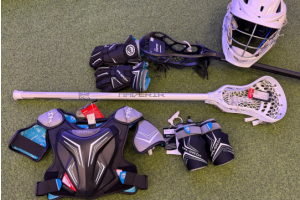
MG: Mouthguard, Gloves, helmet w/ facemask and chinstrap, and NOCSAE ND200 chest protection are all mandatory, all other equipment is optional. The NOCSAE ND200 chest protection standard ensures adequate upper body protection for the men's contact game.
Unlike traditional field lacrosse, sixes requires no long poles, which simplifies equipment needs and reduces costs. There are no long crosses. Every field player uses a short stick, standardizing equipment requirements across positions.
StringKing Complete 2 Intermediate Defense Lacrosse Stick w/ Type 3 Mesh - A350 Shaft
$159.99
World Lacrosse Sixes rules require the goalkeeper to wear specified protective equipment including a chest or body pad, field-lacrosse helmet with chin strap, facemask, attached throat protector, and padded gloves. Goalkeeper equipment standards remain comprehensive to protect against the concentrated shooting that occurs in sixes.
The higher shot frequency and closer shooting distances in sixes make proper goalkeeper protection even more critical than in traditional field lacrosse.
Maverik Shift EKG Lacrosse Goalie Pads
$149.99
FAQ
What is the main difference between sixes and regular lacrosse?
The field of play is smaller, at 70 meters by 36 meters. Face-offs only occur at the beginning of each quarter and overtime: play is restarted after goals with the goalie taking the ball out of the net. There is a 30-second shot clock. These changes create faster-paced, more balanced games.
How many players are on a sixes lacrosse team?
Sixes Lacrosse is played by two teams of six Players each. Each team fields five field players and one goalkeeper, with Rosters consist of 12 players.
Will sixes replace traditional field lacrosse?
No, sixes is designed as a complementary format. A natural evolution of the sport, sixes is at the intersection of field and box lacrosse, offering an inclusionary opportunity to all existing lacrosse players and an easier entry point for new athletes.
Why was sixes created?
Sixes was developed in order to reduce barriers to entry for lacrosse (such as cost and field size), encourage global growth, and to fit within the framework of future Olympic participation. Sixes is played on a smaller field (70x36m) and was created to increase accessibility, reduce costs and make the game more equitable for global competition. It eliminates positional specialisation that has traditionally favoured North American teams.
Is sixes easier than regular lacrosse?
Sixes isn't easier — it's different. Instead, you have to find athletes who can play both ways. Sure, you can sub on the fly, but even your "offensive" players will still have to play some defense throughout the game. The format demands more versatile players.
When will sixes be in the Olympics?
It will make its Olympic debut in 2028. The LA28 Olympics will feature sixes lacrosse, making this format particularly relevant for new fans.
Do you need special equipment for sixes?
Equipment requirements are similar to traditional lacrosse but simplified. There are no long crosses. All field players use short sticks, which standardizes gear needs and reduces equipment costs.
How long does a sixes game take?
Games are played with four eight-minute quarters, plus multiple three-minute sudden death periods if a tie remains after regulation. There is a 15-minute halftime intermission. Total game time is shorter but more action-packed than traditional lacrosse.
Ready to experience the future of lacrosse? Browse our complete selection of sixes-ready gear at LacrosseMonkey.com and get equipped for the fastest-growing format in the sport. Whether you're gearing up for Olympic-style play or just want more touches in a faster game, we have everything you need to dominate the smaller field.