Women’s Lacrosse Rules: Lacrosse Shooting Space Explained


Shooting space is one of the most confusing rules in women's lacrosse — and one of the most important. If you've ever watched a girls lacrosse game and wondered why the whistle blew when a defender seemed to be playing good defense, you probably witnessed a shooting space violation.
Here's the reality: shooting space violations happen whenfoffes a defender runs into the path of an attacker in their shooting lane, but the rule only applies in specific situations. The confusion comes from the fact that officials don't call shooting space every time a defender is between the ball and goal — there are precise criteria that must be met.
Quick Answer: Shooting space ensures player safety by preventing dangerous shots with defenders in the path. The rule applies when the ball is in the critical scoring area, the shooter has the opportunity to score, and a defender is in the shooting lane without being within one stick length of an offensive player.
What Is Shooting Space in Girls Lacrosse?
Shooting space, officially called "Free Space to Goal," is a path to goal within the critical scoring area as defined by two lines extending from the ball to the outside of the goal circle. In plain English, it's the imaginary shooting lane between the ball carrier and the goal.
The rule is simple in concept: shooting space violations are unique to women's lacrosse, designed to protect players from being hit by the ball when in a dangerous position. When a defender steps into this shooting lane at the wrong time, they create a dangerous situation where the attacker must either shoot through a player or give up a scoring opportunity.
Think of shooting space like an invisible cone extending from the ball to both sides of the goal circle. The shooting lane can be visualized by imagining two lines extending from the ball carrier, one going to the left side of the goal circle, and the other going to the right. Defenders cannot enter this space unless they meet specific criteria.
Why the Shooting Space Rule Exists
The shooting space rule prioritizes safety by preventing dangerous play. If a defender is standing in the shooting lane, it creates a high-risk situation for injury, as shots in lacrosse are fast and powerful. This safety concern is even more critical in women's lacrosse because women's lacrosse players have less protective gear than in men's lacrosse.
Unlike men's lacrosse, where players wear helmets and heavy padding, women's lacrosse emphasizes skill and finesse over physical contact. Women's lacrosse has specific rules set in place to help keep active players safe during gameplay, and obeying this rule not only keeps you from giving up uncontested shots, but it's meant to also help avoid injuries.
The rule acknowledges that lacrosse shots are powerful and potentially dangerous. By preventing defenders from standing directly in shooting lanes, the rule reduces the risk of players getting hit by high-speed shots while maintaining the competitive nature of the game.
When Is Shooting Space Actually Called?
This is where most confusion happens. Officials use specific criteria before calling a shooting space violation. Officials must know and apply the criteria for a shooting space violation: ball must be in the Critical Scoring Area, above the goal line extended; ball carrier must have the opportunity to shoot; defender must be within the free space between the ball carrier and goal circle.
The Four Critical Criteria
1. Ball Position: The ball must be in the Critical Scoring Area, above the goal line extended. If the ball is behind the goal line extended or too far from the goal, shooting space doesn't apply.
2. Shooting Opportunity: The ball carrier must have the opportunity to shoot. If the attacker is falling down, being closely defended, or clearly not in position to shoot, the rule doesn't apply.
3. Defensive Position: The defender must be within the free space between the ball carrier and goal circle. They must actually be in the shooting lane, not just nearby.
4. Proximity Rule: The defender cannot enter this space unless they are within a stick's length of the shooter. This is the key exception — if a defender is actively marking (within one stick length), they can be in the shooting space.
Additional Context
No defensive player will be penalized if positioned below the extension of the goal line. This means defenders can position themselves closer to the goal without worry if they're below this imaginary line.
A 2017 rule change eliminated "looking to shoot" from the shooting space criteria, simplifying the interpretation for officials and making the rule more objective.
What Is Not Shooting Space?
Understanding what doesn't qualify as shooting space is just as important as knowing what does. Many situations that look like shooting space violations actually aren't fouls because they don't meet all the necessary criteria.
Ball Position Exceptions: If the attacker is below the goal line extended or outside the critical scoring area, there's no shooting space violation regardless of where defenders position themselves.
No Shooting Opportunity: When an attacker is falling, off-balance, being closely defended by another player, or clearly not in position to shoot, shooting space doesn't apply even if a defender is in the lane.
Active Marking: Defenders can block with their stick and enter the shooting lane if they are within one stick length of the shooter. This "one stick length" rule is crucial — active defenders marking their player have the right to that space.
Incidental Contact: A defender entering the shooting space by being drawn into the space by another attacker (chasing her girl) is not in violation of the shooting space. If a defender is legitimately marking an opponent who moves into the shooting space, that's not a foul.
What Happens After a Shooting Space Foul?
The penalty is an eight-meter shot for the offensive player. During this shot, the penalized defender will start four meters behind the shooter. This free position is awarded from the nearest hash mark on the 8-meter arc.
A shooting space violation calls for an immediate whistle by the umpire, granted that the attacking player with the ball would have the opportunity to shoot, and the attacker will be awarded a free position from the nearest hash mark on the 12-meter arc.
The immediate whistle is important — unlike some fouls that officials might let play out, shooting space requires an instant stop to prevent dangerous situations.
How Defenders Can Avoid Shooting Space Calls
Smart defensive positioning eliminates most shooting space violations. To avoid being called for shooting space, defenders should try to approach the attacker rather than their shooting lane. Defenders should instead aim to approach from an angle and put their stick in the shooting lane to challenge the shot without violating the rule.
Key Defensive Strategies:
- Approach at Angles: Never run straight toward the goal from behind an attacker. Come at attackers from the side to stay out of the direct shooting lane.
- Mark Actively: A defender cannot run into the shooting space or place themselves directly between the shooter and the goal unless they are actively marking an attacker. If a defender enters the shooting space and is not within one stick length of the attacker, the referee will stop play.
- Use Your Stick: You can challenge shots with stick positioning without putting your body in the shooting lane. Extend your stick into the space while keeping your body at an angle.
- Read the Field: Teach defenders to identify when they are potentially in shooting space and how to adjust their positioning to avoid unnecessary fouls while still defending effectively.
The one-stick-length rule is your friend as a defender. If you can maintain that proximity to an attacker, you have the right to defend in the shooting space.
What Gear Matters Most in Girls Lacrosse Around the Critical Scoring Area?
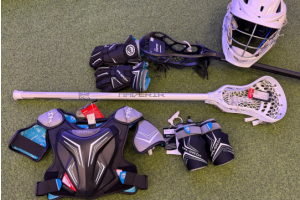
Since shooting space is fundamentally a safety rule designed to prevent dangerous situations near the goal, having the right protective equipment becomes crucial for players operating in these high-risk areas.
Essential Safety Equipment:
Eyewear Protection: ASTM-approved goggles are mandatory in most girls lacrosse formats. Since shooting space violations often involve high-speed shots in close quarters, proper eye protection is non-negotiable.
Gait Glory 2 Women's Lacrosse Goggles
$99.99
Goalie Equipment: Goalies face the most risk in shooting space situations since they're the ultimate target of contested shots.
STX Eclipse III Men's Unstrung Goalie Lacrosse Head
$129.99
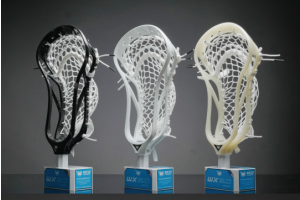
Sticks for Critical Scoring Areas: The pocket depth and head design affect how quickly players can release shots, which impacts shooting space situations. Shallow pockets required in women's lacrosse mean quick release becomes even more important.
Gait Apex 2 Women's Complete Lacrosse Stick
$299.99
Mouthguards: While always required, mouthguards provide crucial protection during contested shooting situations where shooting space violations increase collision risk.
The gear matters because shooting space violations create exactly the dangerous situations these safety requirements are designed to protect against. When defenders are in shooting lanes, the risk of deflected shots and close-range impacts increases significantly.
Frequently Asked Questions
What is shooting space in girls lacrosse?
Shooting space is a path to goal within the critical scoring area as defined by two lines extending from the ball to the outside of the goal circle. Defenders cannot enter this space unless they're within one stick length of the ball carrier.
When is shooting space called in girls lacrosse?
Shooting space is called when the ball is in the Critical Scoring Area above the goal line extended, the ball carrier has the opportunity to shoot, and a defender is in the free space between the ball carrier and goal circle without actively marking within one stick length.
Is shooting space a major foul?
Shooting space violations result in an immediate eight-meter free position shot for the offensive player, making it a significant foul that can directly lead to scoring opportunities.
What happens after a shooting space violation?
The attacker receives an eight-meter free position shot, and the penalized defender must start four meters directly behind the shooter.
How can defenders avoid shooting space?
Defenders should approach the attacker rather than their shooting lane, coming at attackers from an angle and putting their stick in the shooting lane to challenge the shot without violating the rule.
What is the difference between shooting space and 3 seconds?
Shooting space involves the shooting lane and requires an immediate shooting opportunity, while the 3-second rule penalizes defensive players for being inside the 8-meter arc longer than 3 seconds without marking a player on the opposing team.
Does shooting space exist in all women's lacrosse formats?
Yes, shooting space is a fundamental safety rule across youth, high school, college, and international women's lacrosse, though specific interpretations may vary slightly between organizations.
Can defenders ever be in the shooting space legally?
Defenders can enter the shooting space if they are within a stick's length of the shooter, meaning they're actively marking the ball carrier rather than just positioning themselves in the lane.
Ready to gear up for women's lacrosse? Browse our complete selection of women's lacrosse equipment including ASTM-approved eyewear, regulation sticks, and goalie gear designed specifically for the women's game.