Can You Wear Soccer Cleats for Lacrosse?


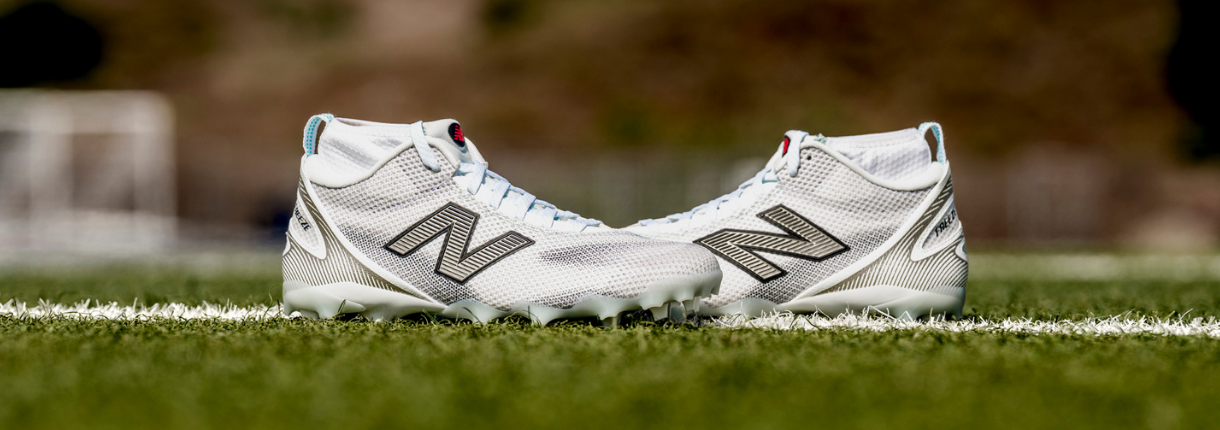
If your player already owns soccer cleats — or football cleats, or turf shoes — it's a fair question. Lacrosse is an expensive sport to gear up for, and before you buy another pair of shoes, you want to know whether what's already in the bag will work.
Here's the honest answer: it depends. Soccer cleats can work for lacrosse in some situations. Football cleats can too. Turf shoes may actually be the best call on certain surfaces. But lacrosse cleats exist for a reason — and once you understand what makes them different, the right choice for your player becomes a lot clearer.
This guide covers everything: cleat rules, surface matchups, the real differences between each shoe type, position-specific recommendations, a youth buying guide, and a pregame checklist. No fluff.
The Quick Answer
Yes — in some situations. Soccer cleats may work fine for beginners, younger players, or multi-sport athletes who already own a pair that fits well and is allowed by the league or facility. But soccer cleats are not built for lacrosse movement, and most dedicated players benefit from lacrosse-specific footwear once they're practicing or competing regularly.
- ✅ Soccer cleats: May work for beginners and recreational play on grass
- ✅ Football cleats: Can work — lightweight skill-position styles are best
- ✅ Turf shoes: Often the right call for artificial turf practices
- ✅ Lacrosse cleats: Usually the best long-term choice for regular players
- ⚠️ Always verify league, coach, and facility rules before game day
Can You Wear Soccer Cleats for Lacrosse?
Yes — but "allowed" and "ideal" are two different things.
Lacrosse, soccer, and football cleats can all technically work on a lacrosse field. The main rule most leagues enforce is to avoid metal spikes — most leagues ban them. Beyond that, the decision comes down to fit, surface, traction, and how the player moves.
Soccer cleats are designed primarily for forward motion on grass fields, optimizing straight-line speed and traction. Lacrosse, on the other hand, requires frequent and rapid changes in direction, sudden stops, and more aggressive lateral movements. Therefore, the traction needs of a lacrosse player differ significantly from that of a soccer player.
A pair of cleats can be technically allowed and still not be the right call. The goal of this guide is to help you figure out which option actually gives your player the best shot at moving well, staying safe, and performing at their level.
The Main Rule: Surface First, Sport Second
Before comparing soccer cleats, football cleats, lacrosse cleats, and turf shoes, find out where the player practices and plays most often.
A cleat that grips beautifully on natural grass may feel too aggressive—or not be permitted—on some artificial turf fields. Turf shoes are best for most artificial turf, or if you're playing box lacrosse indoors, because traditional cleats can damage the surface. On wet or soft natural grass, a shoe without enough stud depth can leave a player slipping during cuts and changes of direction.
| Surface | Best Starting Point | What to Check |
|---|---|---|
| Natural Grass | Lacrosse cleats or approved molded athletic cleats | Traction, fit, comfort, and stud condition |
| Artificial Turf | Turf shoes or turf-friendly cleats | Facility rules, comfort, and whether longer studs are permitted |
| Indoor Court | Court shoes or approved indoor athletic shoes | Traditional cleats are generally not appropriate |
| Mixed Grass & Turf | Versatile molded cleats or both cleats and turf shoes | Player schedule, comfort, and field policies |
| Wet or Soft Grass | Cleats with a more aggressive traction pattern | League rules regarding removable or metal studs |
Ask the coach or league where the team practices and plays before buying anything. Some players only need one versatile pair. Others—especially those splitting time between grass games and turf practices—may benefit from owning both cleats and turf shoes.
Lacrosse Cleats vs Soccer Cleats vs Football Cleats vs Turf Shoes
The goal isn't to choose footwear based solely on the sport it's designed for. Instead, match the shoe to the player, the playing surface, and the type of movement they'll perform most often.
| Footwear Type | Can It Work for Lacrosse? | Best For | Watch Out For |
|---|---|---|---|
| Lacrosse Cleats | ✅ Yes | Regular players, natural grass, cutting, dodging, and quick direction changes | Proper fit and league or facility footwear rules |
| Soccer Cleats | ⚠️ Sometimes | Beginners, speed-focused players, and multi-sport athletes | Less lateral support and typically no toe stud |
| Football Cleats | ⚠️ Sometimes | Players who already own football cleats or prefer added support | Heavier models, bulky toe boxes, and facility restrictions |
| Turf Shoes | ✅ Yes, on turf | Artificial turf, practices, and indoor training | Reduced traction on wet or soft natural grass |
| Baseball Cleats | ❌ Usually Not Ideal | Only if specifically permitted by the league | Metal spikes, toe cleat design, and baseball-specific outsole pattern |
The safest starting point is to check your league and facility rules first. From there, choose the shoe that offers the best combination of fit, traction, comfort, and support for the surface the player uses most often.
What Makes Lacrosse Cleats Different?
Lacrosse is not just straight-line running. Players accelerate, stop, dodge, cut, pivot, backpedal, defend, scoop ground balls, and absorb contact — often in the same possession.
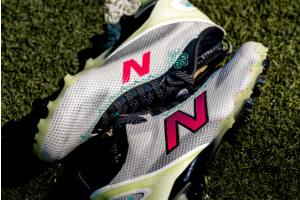
Lacrosse cleats are built for multi-directional movement, stability, and lateral agility. They combine features of soccer cleats for speed and football cleats for physical play, making them ideal for fast-paced games with cutting and pivoting.
Here's where the design differences actually show up on the field:
Toe Stud
One of the key differences between lacrosse and soccer cleats is that soccer cleats don't have a toe stud. That's because it would drag on the ground while kicking, and could easily injure other soccer players. Because they lack a toe stud, soccer cleats can reduce your maneuverability on the lacrosse field.
Stud Pattern
Soccer cleats have shorter, rounded studs designed for smooth footwork and ball handling, but don't offer the lateral grip needed for aggressive cutting in lacrosse. Lacrosse cleats strike a perfect balance, featuring shorter studs for grip without excess drag, allowing for quicker movements without compromising stability.
Ankle Cut
Lacrosse cleats are designed with a higher ankle cut to provide additional support and stability, essential for the sport's frequent lateral movements and physical contact. This design helps reduce the risk of ankle sprains and enhances overall balance during intense gameplay. In contrast, soccer cleats are typically low-cut, prioritizing ankle mobility to allow for swift, precise footwork.
Toe Box and Durability
Soccer cleats have a thin, soft toe for ball control, making them less durable for the constant cutting and change of direction in lacrosse. Lacrosse cleats use a molded toe cap to provide extra durability without adding unnecessary weight.
Endurance and Comfort
Lacrosse games demand endurance, with constant sprinting, stopping, and changing direction. Football cleats are often stiff and bulky, built for short bursts of action rather than sustained movement. Soccer cleats are minimalist and lightweight, but they lack ankle support and cushioning for extended play on turf and grass. Lacrosse cleats are designed for comfort and flexibility, ensuring your feet feel fresh from the first whistle to the final minute.
Lacrosse cleats are the right move when a player is practicing regularly, competing in games, or stepping up to school, club, or tournament play.
Soccer Cleats for Lacrosse: When They Work, When They Don't
You can use soccer cleats to play lacrosse, and some players choose to do this for various reasons. Soccer cleats are often a convenient option if you already have a pair or if you prefer a lightweight, low-cut design that allows for agile movement.
On the upside, soccer cleats are often praised for their comfort and lightweight feel. Many players appreciate the flexibility and natural movement they provide, especially those transitioning from soccer to lacrosse. If you're just getting started, they can absolutely get you on the field.
The biggest question isn't can you wear soccer cleats—it's when does it make sense?
| Soccer Cleats Work Well When... | Lacrosse Cleats Are the Better Choice When... |
|---|---|
| The league or facility allows them | The player practices or competes regularly |
| They fit securely with no heel movement | Extra support is needed for cutting, dodging, and quick direction changes |
| The player is new to lacrosse or plays recreationally | The player is slipping during starts, stops, or ground balls |
| The outsole matches the playing surface | Most games are played on natural grass fields |
| The player values a lightweight, speed-focused feel | Maximum traction, toe-stud grip, and lacrosse-specific performance are priorities |
Soccer cleats typically have a shallower stud pattern and do not include the front toe stud found on most lacrosse cleats. For younger or recreational players, that usually isn't a deal-breaker. But as the speed and intensity of play increase, the additional traction and support offered by lacrosse-specific cleats become much more noticeable.
Watch the player's first few practices closely. If they're slipping on cuts, struggling to plant their feet, developing blisters, or feeling unstable during ground balls, it's probably time to upgrade to a dedicated pair of lacrosse cleats.
Football Cleats for Lacrosse: What Actually Works
Football and lacrosse cleats have a lot in common. In fact, football cleats are often allowed in lacrosse because both sports demand explosive acceleration, quick changes of direction, and traction on natural grass. Both typically feature a toe stud that helps players accelerate and plant during cuts.
However, not every football cleat is a great choice for lacrosse. Lightweight skill-position models translate much better than bulky lineman cleats, which prioritize stability and power over speed and agility.
Football cleats also tend to have stiffer plates designed to withstand blocking and tackling, while lacrosse cleats are generally built with more flexibility to support constant running, dodging, and ground-ball play.
| Football Cleat Type | Works for Lacrosse? | Best Use |
|---|---|---|
| Lightweight Skill-Position Cleats | ✅ Yes | Excellent crossover option for speed positions. |
| Mid-Cut Football Cleats | ✅ Usually | Good balance of support and mobility. |
| Heavy Lineman Cleats | ❌ Not Recommended | Too bulky and restrictive for most lacrosse players. |
| Detachable Stud Cleats | ⚠️ Depends | Always verify league and facility rules first. |
| Metal Stud Cleats | ❌ Rarely Allowed | Prohibited in most youth and high school leagues. |
Before wearing football cleats for lacrosse, ask yourself:
- Do they fit securely without heel slip?
- Can the player sprint, cut, and stop comfortably?
- Are they lightweight enough for constant running?
- Are the studs permitted by the league and facility?
Football cleats can be an excellent short-term solution—especially if you already own a lightweight pair built for speed. If you're buying footwear specifically for lacrosse, however, lacrosse cleats are usually the better long-term investment because they're designed around the sport's movement patterns and field demands.
Lacrosse Cleats vs Turf Shoes
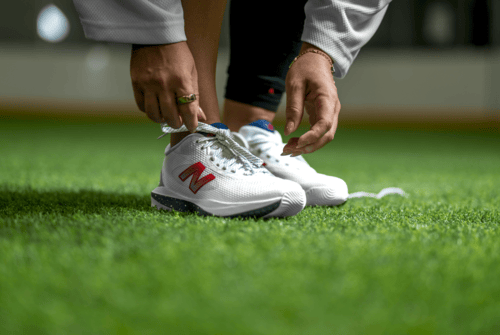
Turf shoes deserve their own conversation because many youth, high school, and club lacrosse practices now take place on artificial turf. Choosing the right footwear isn't just about comfort—it also affects traction, safety, and whether your footwear complies with facility rules.
Lacrosse turf shoes use dozens of small rubber nubs instead of traditional studs. They provide reliable grip on artificial surfaces without digging into the turf, making them a great option for practices, training sessions, and indoor facilities. They're lightweight, comfortable, and still provide the lateral support needed for lacrosse movements.
Traditional lacrosse cleats, on the other hand, excel on natural grass where deeper studs provide better traction for sprinting, cutting, dodging, and changing direction. Some turf facilities, however, restrict longer cleats because they can damage the playing surface.
| Choose Lacrosse Cleats When... | Choose Turf Shoes When... |
|---|---|
| The player competes mostly on natural grass. | Most practices are on artificial turf. |
| Fields are soft, wet, or natural grass. | The surface is short-pile or hard artificial turf. |
| Maximum traction is needed for aggressive cuts. | Comfort and consistent footing on turf are the priority. |
| The facility allows molded cleats. | The facility restricts longer cleats or studs. |
| Game-day performance on grass matters most. | Training, warmups, indoor sessions, or daily practices are the focus. |
On natural grass, molded lacrosse cleats generally provide the best traction. On artificial turf, turf shoes usually offer better comfort while reducing wear on the playing surface. Regardless of the footwear you choose, avoid metal spikes unless your league specifically allows them.
Many experienced players eventually own both. A pair of molded lacrosse cleats for games and natural grass fields, plus a pair of turf shoes for weekday practices and indoor facilities, gives you the best performance across every surface.
Low-Cut, Mid-Cut, or High-Cut Cleats
Cleat height changes how a shoe feels on your foot, but it doesn't determine whether it's the right choice. Proper fit, traction, comfort, and the playing surface matter much more than whether the collar sits below or above your ankle.
| Cut Type | Best For | Things to Consider |
|---|---|---|
| Low-Cut | Speed-focused players, attack, and midfield | Lightweight and flexible but offers less ankle coverage. |
| Mid-Cut | Players wanting a balance of mobility and support | Slightly heavier than low-cut models but adds stability. |
| High-Cut | Players who prefer a more secure, supportive feel | Can feel bulkier or more restrictive during long runs. |
Low-cut cleats have collars that sit well below the ankle. They're the lightest option, making them popular with attackmen, midfielders, and players who value speed and quick changes of direction. While they allow excellent mobility, they provide less ankle coverage than taller cuts.
Mid-cut cleats extend just below the ankle and offer a balance of flexibility and support. For many players—especially beginners—they're a versatile choice that works well across multiple positions and playing styles.
High-cut cleats provide the most coverage around the ankle and can feel more secure for players who like extra structure. However, they typically weigh more and may feel restrictive if they don't fit properly.
The most important test is simple: the player should be able to sprint, stop, cut, backpedal, and change direction comfortably. If the cleat feels awkward or limits natural movement, it's not the right fit—regardless of whether it's low-, mid-, or high-cut.
Best Cleats by Lacrosse Position
Position can help narrow your options, but it shouldn't be the only factor in your decision. The best lacrosse cleats are the ones that fit comfortably, match the playing surface, and give the player confidence to move naturally. Use this guide as a starting point—not a strict rule.
| Position | Footwear Priorities |
|---|---|
| Attack | Lightweight feel, explosive acceleration, aggressive traction for dodges, rolls, and quick cuts. |
| Midfield | Comfort for constant running, balanced cushioning, versatile traction for offense and defense. |
| Defense | Lateral stability, dependable traction, and support for physical play and quick directional changes. |
| Goalie | Stable base, excellent crease grip, and comfort for explosive side-to-side movement. |
| Youth / Beginner | Proper fit, all-day comfort, surface-appropriate traction, and zero heel slipping. |
Attack
Attack players rely on quick first steps, sharp cuts, and rapid changes of direction to create scoring opportunities. Lightweight lacrosse cleats with aggressive traction—especially a toe stud—help maximize grip during dodges, rolls, and sudden accelerations.
Soccer cleats can work for newer or recreational players who already own a pair, but dedicated lacrosse cleats generally provide better traction for the movement patterns attack players perform every game.
Midfield
Midfielders cover more ground than anyone else on the field, making comfort just as important as traction. Look for a cleat that combines lightweight performance with enough cushioning to stay comfortable through four quarters, overtime, or tournament weekends.
Both low-cut and mid-cut lacrosse cleats are popular choices, depending on personal preference and playing style.
Defense
Defensemen spend much of the game backpedaling, shuffling laterally, and reacting to attacking players. Stability and dependable traction are often more valuable than shaving a few ounces of weight.
Many defenders prefer mid-cut lacrosse cleats for added support without sacrificing mobility. Lightweight football cleats may also be an option if they're permitted by the league and match the playing surface.
Goalie
Goalies need a stable platform that allows explosive pushes across the crease without slipping. Most goalies prefer low- or mid-cut lacrosse cleats that balance grip with flexibility.
Since goalie movement consists of short, explosive bursts rather than long-distance running, comfort and predictable traction are more important than maximum speed.
Youth and Beginner Players
If you're buying your first pair of lacrosse cleats, don't overthink the position. Young players often rotate between midfield, attack, defense, and even goalie throughout the season.
Focus on finding footwear that fits correctly, feels comfortable, and matches the playing surface. A properly fitting cleat will help players move confidently while reducing the risk of blisters, slipping, and unnecessary foot fatigue.
Youth Lacrosse Cleat Buying Tips
Parents often want to buy big to get more seasons out of a pair. Resist that impulse. Cleats should fit snugly without pinching, allowing for natural foot movement. Test for comfort by walking or jogging in them to avoid blisters or discomfort during play.
Use these tips when buying youth lacrosse cleats:
- Don't buy too big — a loose shoe creates heel slipping, blisters, and poor control during cuts
- A little toe room is fine; the heel should never slip
- Check width as well as length — a narrow shoe on a wide foot is a recipe for blisters
- Have the player try cleats on with game socks, not school socks
- Make sure they can sprint, stop, and cut comfortably before you leave the store
- Ask the coach whether the team plays mostly on grass, turf, or both
- Replace worn cleats — worn studs reduce traction and make the player unstable
- Avoid heavy cleats for very young players — lighter is better for development
- For the first season, the best cleat is the one that fits securely, matches the field, and feels comfortable
Nike Huarache 9 Elite Mid Lacrosse Cleats
$119.99
New Balance Burn X5 Low Lacrosse Cleats
$103.99
When Should You Buy Lacrosse-Specific Cleats?
You don't necessarily need lacrosse-specific cleats on day one — especially if the player is brand new and already owns approved soccer or football cleats. But there are clear signals that an upgrade makes sense.
Buy Lacrosse Cleats When...
- The player is practicing or competing regularly — more than once a week
- Soccer cleats feel too light or unsupportive during cuts and dodges
- Football cleats feel too heavy or stiff for sustained running
- The player is slipping during cuts, ground balls, or direction changes
- The player plays mostly on natural grass
- The player is moving from recreational play into club, school, or tournament competition
- The player wants lacrosse-specific traction including a toe stud
Reuse Existing Cleats When...
- The player is new to the sport and still exploring
- The cleats fit securely with no heel slipping
- The field surface matches the outsole design
- The league or facility allows that type of cleat
- The player is not slipping or uncomfortable
- The cleats are not worn down or structurally damaged
Use what works. Know when to upgrade.
Common Cleat Mistakes to Avoid
Assuming Soccer Cleats Are Always Fine
While it's not prohibited to wear soccer cleats for lacrosse, it's essential to understand the potential disadvantages and consider the specific requirements of your playing position. If you decide to go this route, ensure you're comfortable with the trade-offs and always prioritize your safety.
Assuming Football Cleats Are Always Better
Football cleats have longer, deeper studs to dig into grass for traction against high-impact plays. While great for linemen, this can slow down lacrosse players who need quick, agile movements. Stick to lightweight skill-position football cleats if you go that route.
Ignoring the Field Surface
Choosing the right type of cleats — firm ground, soft ground, or turf — based on the playing surface ensures optimal performance and safety. Always start with the field, not the sport name on the box.
Wearing Turf Shoes on Wet Grass
Turf shoes may not provide enough grip on soft or wet natural grass. They're designed for consistent artificial turf, not slippery outdoor conditions.
Wearing Long Studs on Turf
Football cleats with long studs can over-grip and damage turf. The same applies to aggressive lacrosse cleats. Check facility rules — many restrict stud length on turf fields.
Buying Cleats Too Big
A loose cleat is not a bargain. It creates heel slipping, blisters, and poor lateral control. Buy for the right fit now.
Choosing by Color First
Style matters — after fit, traction, and surface are handled. A great-looking cleat that slips or causes blisters is not the right cleat.
Using Worn-Out Cleats
Replace cleats when they show significant wear on studs, loss of traction, or structural damage, usually after 1–2 seasons of regular use. Worn studs are a traction problem waiting to become a performance — or safety — problem.
Pregame Cleat Checklist
Use this quick checklist before every practice, game, or tournament to make sure your footwear is ready for the field.
| ✓ | Checklist Item |
|---|---|
| ☐ | Cleats or shoes are approved by your league, tournament, and facility. |
| ☐ | Footwear matches the playing surface (grass, turf, or indoor). |
| ☐ | Cleats fit securely with no heel slipping. |
| ☐ | You can sprint, stop, cut, and change direction comfortably. |
| ☐ | Studs or tread are not worn down. |
| ☐ | Laces stay tied and secure throughout play. |
| ☐ | No sharp, broken, or damaged areas on the outsole or upper. |
| ☐ | Footwear feels comfortable—not too heavy or too stiff for the demands of the game. |
| ☐ | You have the correct footwear for today's field conditions. |
| ☐ | Backup footwear is packed for tournaments or mixed-surface events. |
This checklist is especially useful for players who split time between grass games and turf practices—a common schedule for club, travel, and school-level lacrosse players.
Frequently Asked Questions
Can kids wear soccer cleats for lacrosse?
Yes, kids can wear soccer cleats for lacrosse in many situations, especially if the cleats fit well, match the playing surface, and are allowed by the league or facility. Traction can make a real difference in youth games. On natural grass, soccer or lacrosse cleats both work well, as long as they do not have metal spikes. For players who practice and compete regularly, lacrosse cleats generally provide better traction and support for lacrosse-specific movements.
Are soccer cleats allowed in lacrosse?
In most leagues, yes. The primary requirement is that footwear has composite or rubber soles without metal spikes. Soccer cleats without metal studs typically meet these standards, but it's always a good idea to confirm with your coach, league, tournament, or facility before game day.
Are football cleats allowed in lacrosse?
Football cleats are generally permitted in lacrosse, provided they meet league and facility footwear rules. Lightweight skill-position football cleats tend to work better than heavier lineman styles because they offer greater mobility. Always verify your league's equipment requirements before using football cleats in a game.
Are lacrosse cleats different from soccer cleats?
Yes. While both provide traction, lacrosse cleats are designed specifically for the demands of lacrosse. Soccer cleats are almost always low-cut, feature a different stud pattern, and prioritize straight-line speed. Lacrosse cleats often include a toe stud for improved acceleration, provide stronger lateral traction, and are available in low, mid, and high-cut options for additional ankle support.
Are turf shoes good for lacrosse?
Yes, on the appropriate surface. Turf shoes use small rubber nubs instead of studs, making them ideal for artificial turf while reducing wear on the playing surface. They provide excellent comfort and reliable traction on turf but generally do not perform as well on wet or muddy natural grass fields.
Can you wear baseball cleats for lacrosse?
Baseball cleats are usually not the best choice for lacrosse. Many baseball models use metal spikes, which are prohibited in most youth and high school lacrosse leagues. Even molded baseball cleats have outsole patterns designed for baseball rather than the constant cutting and lateral movement required in lacrosse.
Are metal cleats allowed in lacrosse?
Most youth and high school lacrosse organizations prohibit metal cleats. Some college or professional leagues may allow them depending on league rules and field conditions, but players should always confirm the regulations before wearing metal spikes during competition.
What cleats are best for youth lacrosse?
The best youth lacrosse cleats fit securely, match the playing surface, and provide the traction needed for sprinting, cutting, stopping, and scooping ground balls. Avoid buying oversized cleats simply to extend their lifespan, as poor fit can lead to blisters, discomfort, or increased injury risk. Browse the latest youth lacrosse cleats at LacrosseMonkey to find options for every age and budget.
Should lacrosse players wear cleats or turf shoes?
It depends on the playing surface. Cleats are generally the better choice for natural grass, while turf shoes perform best on artificial turf. Players who regularly switch between both surfaces may benefit from owning both types of footwear to maximize traction and comfort throughout the season.
Find the Right Lacrosse Cleats
Whether you're shopping for your first season or upgrading your current footwear, choosing the right cleats helps improve traction, comfort, and confidence on the field. Browse the latest men's, women's, and youth lacrosse cleats at LacrosseMonkey, including performance models from Nike, New Balance, and other leading brands. You can also explore clearance lacrosse footwear for great deals on trusted equipment that fits your game and your budget.